

Fresh Perspectives from Australian Schools
Australian School Focus: "What is important, What is urgent, & Where we need to start" Dr Danielle Einstein, Clinical Psychologist, The Einstein Report, Adjunct Fellow, Macquarie University
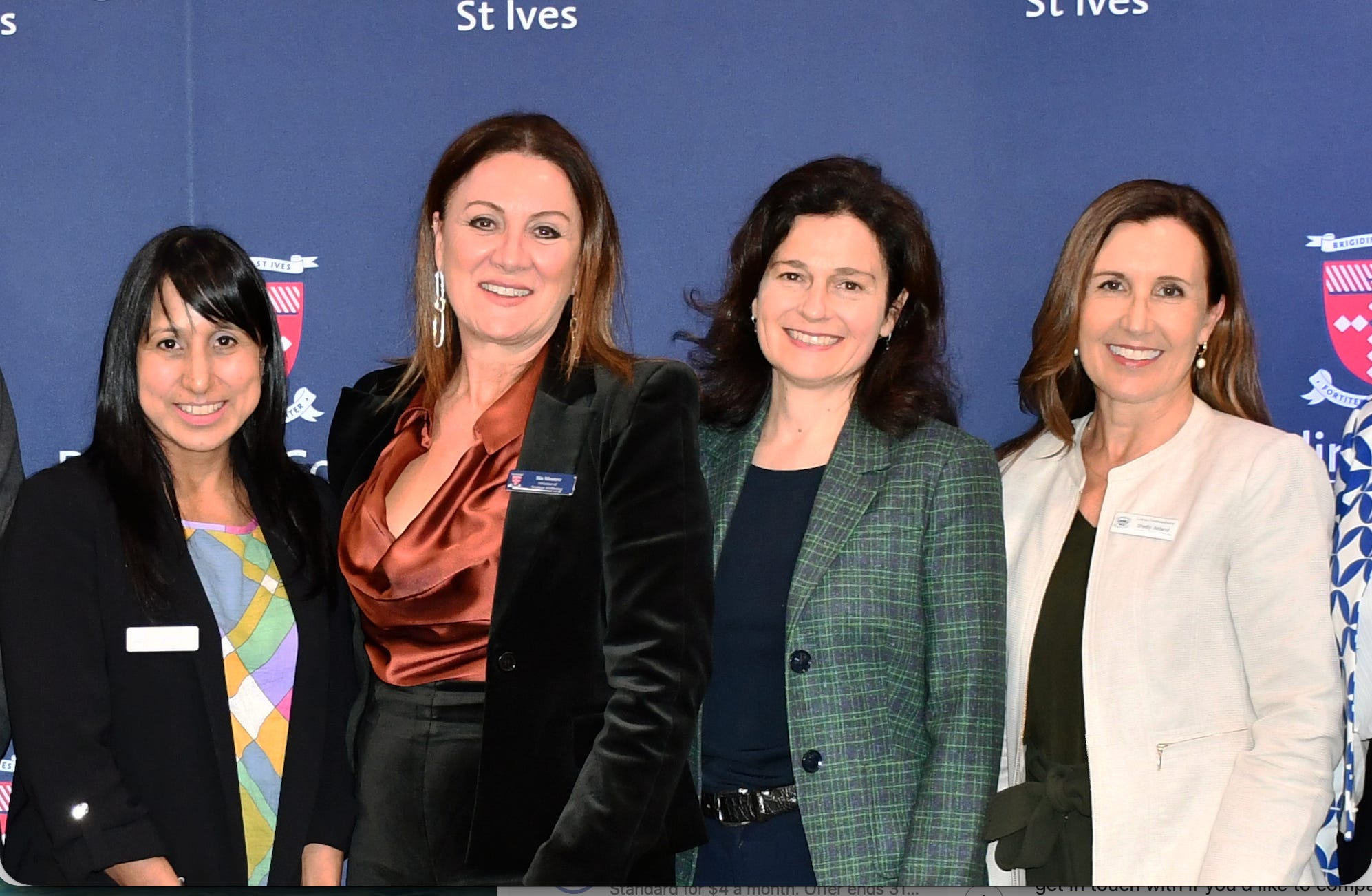
Above: Ms Maria Costa (IS NSW); Ms Sia Mastro (Brigidine College); Dr Danielle Einstein (Keynote Speaker), Ms Shelly Acland (Loreto Normanhurst)
On the 15th May Brigidine College, St Ives ran the Inaugural National Mental Health & Social Media Symposium. Led by Ms Sia Mastro, 120 school leaders representing over 50 schools came together from across Australia. Principals, Year coordinators, Technology specialists and Policymakers from all sectors (Government, Independent and Catholic schools) filled the room.
Year 10 Student at Brigidine College, 8 days before Australia’s regulation commenced.
Keynote Highlights: Dr Danielle Einstein
Take Away Messages
How to create healthy “device discipline” in practical and sustainable ways.
Working with student values, particularly their desire for autonomy and authentic connection, and using these values as the foundation for co-designing student-led initiatives moving forward.
Refuting the idea that building healthy device discipline is simply a matter of “willpower”.
Recognising that policies need to be designed and implemented consistently.
Breaking down emerging international evidence.
Recognising the ‘addictive pull’ of phones, tablets, and computers, and the need for the systems around students to adjust accordingly.
Breakout Panel Discussions
Exploring the impact of anonymous posting online - students and parents; Mr Paul Elias, High School Coordinator at Saint Mary MacKillop College, Albury.
Technoference: Mr Geoff Pete, Principal, Maitland Christian School
Initiatives commenced at schools to raise awareness since the social media regulation was announced, presented by Ms Cassandra Foster, Head of House, from Waverley College, Sydney.
Several breakout groups were run - this group worked through how to combat the increase of social anxiety and the risks posed for social development that emerge from online dependence.
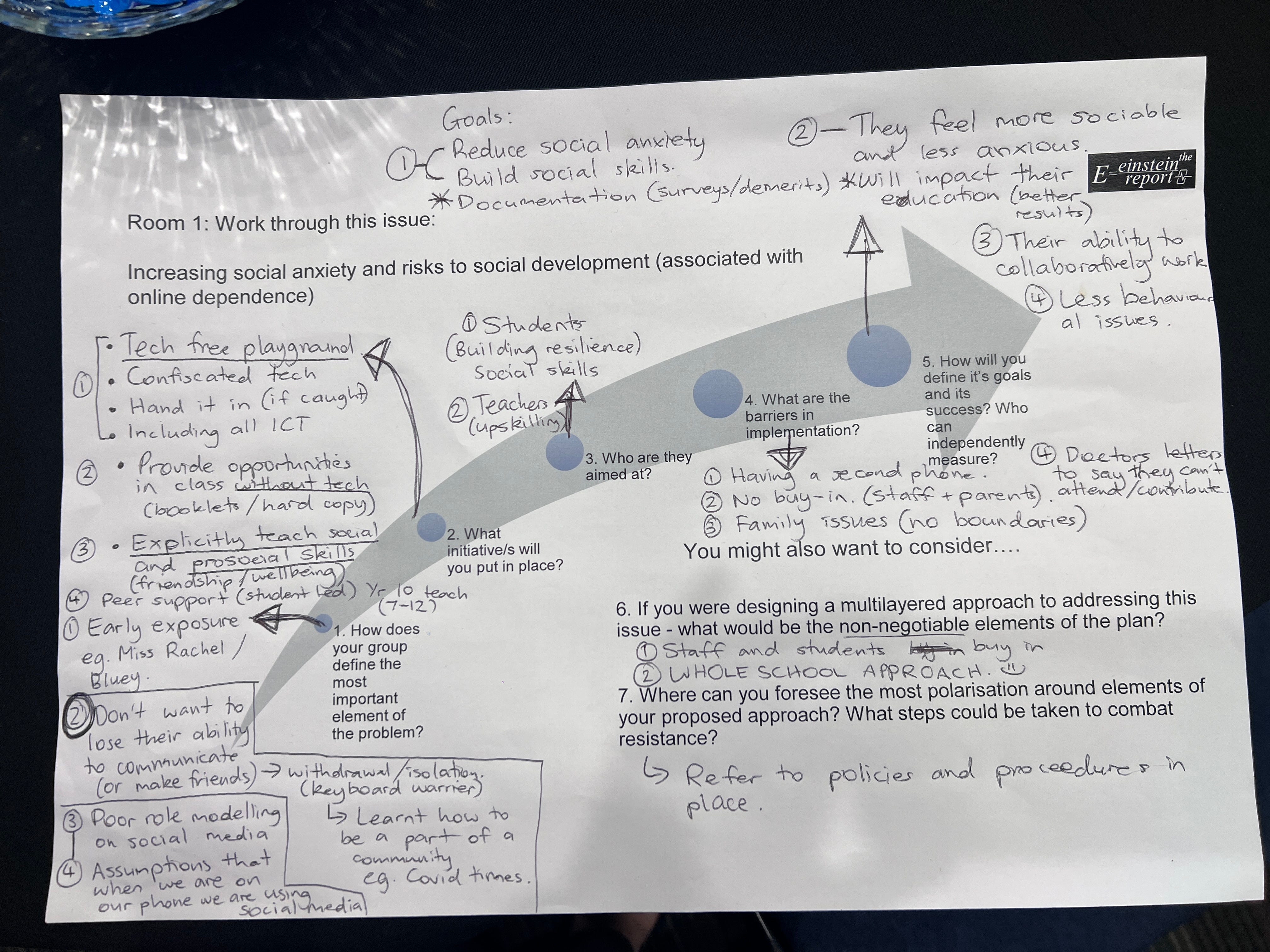
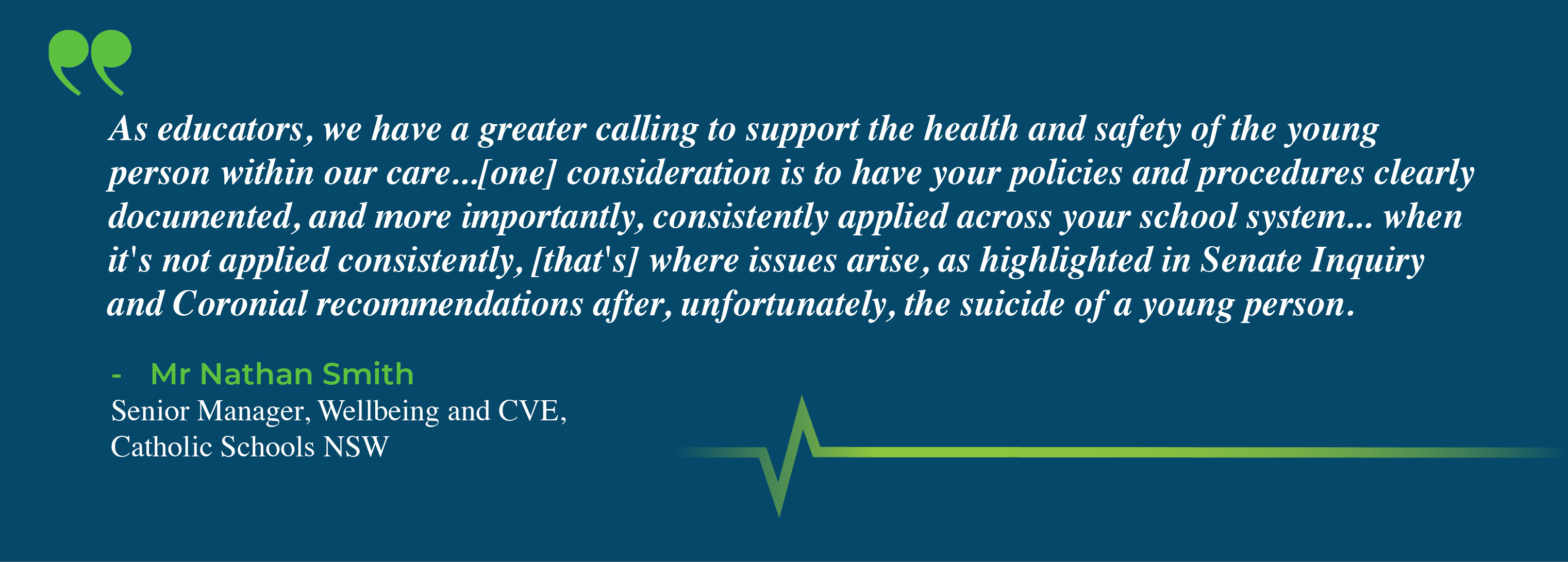
Panel Discussion: Key Explanation from Mr Nathan Smith:
Thank you to Mrs Kate Quinane, Principal, for hosting an energising and thoughtful symposium.
“The overwhelming level of engagement from schools across Australia demonstrates how deeply educators and communities are grappling with the impact of social media on young people,” Kate Quinane, Brigidine College St Ives, said.
To access the full Keynote Address & the set up of the day - please contact Dr Danielle Einstein.
In advance of the symposium, two schools surveyed parents to record their opinions of changes observed since the ban came into effect.
Key Findings (n=91)
A. The debate prompted genuine reflection
Across both schools, the vast majority of parents reported that the public discussion around the social media ban prompted them to think differently or consider taking action.
Parents who reported “some” reflection or more
72 out of 91 79% of all respondents
B. Media coverage shifted opinions on age of access
When asked whether media coverage prior to the ban influenced their opinion on the appropriate age for social media or smartphone access:
39 of 91 parents. (43%) were influenced toward a higher age threshold
Of the parents who said their opinion was not influenced, the majority already held the view that 16 or older was the appropriate age, suggesting they did not need the media coverage to change their minds, as they were already aligned with the policy.
C. Concern about children being socially excluded as a result of the ban was a factor for many parents.
Parents moderately (or more) concerned about social exclusion
57 out of 91. 63% of all respondents
Parents who expressed no concern about social exclusion were strongly in favour of the 16+ age threshold, suggesting those most confident in the policy were least worried about their child being left out.
4. Parents are changing their own technology habits
The restrictions appear to be prompting reflection not just about children’s technology use, but parents’ own habits as well.
This is important to critics who suggest that the regulation has not sparked cultural change.
Parents who made some or significant changes to their own tech use
47% of all respondents
This suggests the ban is having a broader cultural effect within families, not just targeting children’s behaviour in isolation.
Additional Findings — School 2 (n=54)
School 2 included additional questions around parental awareness, government management of the policy, and actions parents believe are still needed.
Parents absorbed significant new information
• 50% (27 of 54) took in a lot of new information about risks for children and young people
• 44% (24 of 54) took in a lot of new information about the impact of social media on mental health
This indicates the policy debate was not just political noise, parents were genuinely engaging with the evidence and learning from it.
Parents want stronger follow-through
When asked what actions are still needed following the introduction of the ban:
Parents who said stronger enforcement is “Highly Needed”
34 out of 54 63% of School 2 respondents
Parents who said ongoing monitoring is “Highly Needed”
33 out of 54 61% of School 2 respondents
These are strong findings. Parents are not simply accepting the ban passively, they are actively calling for it to be enforced and evaluated properly. This directly counters any narrative that the policy lacks community support.
Government management: Room for improvement
While parents broadly supported the direction of the policy, many felt the government’s management could have been stronger:
• Communication with the public: 54% rated it as Good or Excellent, 19% rated it as Poor or Very Poor
• Support for schools and organisations: only 20% rated it as Good or Excellent, with 33% rating it as Poor or Very Poor
• Timeliness of implementation: 44% Good or Excellent, 20% Poor or Very Poor
Support for schools emerged as the weakest area, a finding worth highlighting as it suggests schools may have been under-resourced during the rollout.
Additional Findings — School 1 (n=37)
School 1 included specific questions about the impact of the social media restrictions on teenage wellbeing. These findings are particularly relevant in the context of international debate about whether Australia’s ban has had negative consequences.
Mental Health
• 38% of parents (14 of 37) reported NO negative impact on their teen’s mental health
• Only 19% (7 of 37) reported some or significant negative impact
• 22% (8 of 37) reported some positive impact on their teen’s mental health, including one parent who said, “I feel I’ve got my teen back”
These findings directly counter the narrative that the social media ban has been harmful to young people’s mental health. The majority of parents either saw no negative effect or noticed positive changes.
Sleep
• 32% of applicable respondents (7 of 22) noticed some improvement in their teen’s sleep
• No parents reported a worsening of sleep
Screen Time
• 48% of applicable respondents (11 of 23) reported their teen was spending less time on digital devices overall. This is consistent with observations from the survey conducted by the Molly Rose Foundation.
Focus & Concentration
• 22% of parents (8 of 37) noticed some improvement in their teen’s ability to focus or concentrate
• Only 2 parents noted any decline, no significant worsening reported
Conclusion
The combined results from these two schools present a broadly positive early picture of the impact of Australia’s social media restrictions. The policy has:
• Prompted widespread reflection among parents about their family’s technology use
• Shifted a significant proportion of parents’ opinions toward supporting a higher age threshold for social media access
• Started meaningful changes in technology habits, for both children and adults
• Generated strong parent demand for continued focus
• Produced positive outcomes in teen wellbeing, including mental health, sleep, and screen time, without the widespread negative consequences that critics predicted